
We’ve all heard about gratitude lists. They’re touted as miracle workers for mental wellbeing, but if I’m being honest, sometimes writing “I’m grateful for my cup of tea” doesn’t feel particularly transformative. Yet despite my initial scepticism, I’ve discovered that a properly crafted gratitude list can genuinely shift your perspective and help you love life more—when approached with intention rather than obligation.
What makes a gratitude list worth creating?
There’s a world of difference between robotically jotting down generic items and truly connecting with what brings you joy. A meaningful gratitude list isn’t about listing impressive achievements or material possessions. It’s about recognising the small threads that weave together to create a life worth loving.
As someone who spent years in the manufacturing business before embarking on this more purposeful journey, I’ve learned that practical approaches often yield the best results—even when it comes to something as seemingly abstract as gratitude.
The science behind gratitude lists
Before we dive into the how-to, it’s worth noting that gratitude practices aren’t just feel-good exercises. Research consistently shows that regularly acknowledging what we’re grateful for reduces stress, improves sleep quality, and even strengthens our immune systems. When we train our brains to notice the positive, we literally change our neural pathways.
This isn’t about ignoring life’s challenges or toxic positivity. It’s about creating balance in a world where our brains are wired to focus on threats and problems.
How to create a gratitude list that works
Start small but specific
Rather than writing vague entries like “my family” or “my health,” try being precise about exactly what you appreciate:
- “The satisfying muscle ache after today’s walk around the neighbourhood”
- “The way my daughter’s face lit up when I read her favourite story tonight”
- “How the morning sunlight creates patterns on my kitchen wall during breakfast”
Engage your senses
Our strongest memories and emotions are often tied to sensory experiences. Include items that involve taste, touch, smell, sound and sight:
- “The comforting warmth of my hands wrapped around my morning coffee mug”
- “The smell of rain on pavement during my afternoon walk” – I love the smell of rain, find out more about Petrichor if you do too
- “The gentle background sound of my partner humming while cooking dinner”
Include ordinary moments
We often overlook the everyday magic happening around us. Train your attention to notice the seemingly mundane:
- “Having hot water for my shower this morning”
- “The efficiency of the traffic lights on my commute working properly”
- “The convenience of technology that let me instantly see my friend’s new baby photos”
Record unexpected gifts
Make note of unplanned pleasant surprises that brightened your day:
- “The unexpected compliment from a colleague on work I’d put extra effort into”
- “Finding a forgotten £5 note in my coat pocket”
- “The bus driver waiting an extra moment when he saw me running for the bus”
Acknowledge personal growth
Recognise the ways you’re evolving and developing:
- “My consistency in taking time for myself despite a busy week”
- “My improved patience when explaining homework to my son compared to last year”
- “How I was able to stay calm during a difficult conversation at work”
Making it a sustainable practice
The key to any practice is sustainability. Here are some practical approaches to make your gratitude list a natural part of life rather than another chore:
Choose a consistent time
Attach your gratitude practice to an existing habit. Perhaps while waiting for the kettle to boil for your morning tea, or just after brushing your teeth at night. Although don’t beat yourself up if you miss your slot, habits take a while to form. When you remember you missed it though juts do it straightaway else the habit forming of creating your gratitude list will get further away.
Keep it manageable
Three deeply felt items are more valuable than ten superficial ones. Quality matters more than quantity.
Mix up your method
Don’t feel bound to a notebook – this one is key for me, I used to beat myself up for not being any good with the journalling method. You might:
- Take photos of things you’re grateful for
- Use voice notes on your phone
- Create a dedicated email folder where you send yourself gratitude moments
- Share gratitudes with a partner or friend over dinner. Or include your kids, they may scoff at first but I bet you within a couple of days you’ll notice a difference.
Review periodically
Every month or so, look back over your entries. You’ll likely notice patterns about what truly brings you joy, which can help you make decisions that align with what matters most to you. It can be really helpful if you are having an off day too. When you see all the things you are grateful for you will get a boost, I promise! Even the eternal optimist in me needs a boost occasionally.
When gratitude feels difficult
There are seasons in life when finding gratitude feels nearly impossible. During particularly challenging times:
- Acknowledge the difficulty without judgment
- Lower the bar – maybe you’re just grateful you got out of bed today
- Focus on the smallest possible positive – the taste of your breakfast, one moment of quiet
- Remember that practising gratitude during tough times builds the resilience that makes the practice most valuable
From obligation to opportunity
The most powerful shift happens when you move from seeing a gratitude list as something you “should” do to recognising it as an opportunity to notice what makes your life worth loving.
I keep a small notebook by my bedside table. Nothing fancy – just an ordinary lined pad. Each night, I jot down three specific moments from the day that brought me joy or comfort (when I remember – other times I voice note myself when out and about). Some days the entries write themselves; other days I have to search a bit harder. But this simple practice has trained my brain to notice these moments as they’re happening, creating a real-time awareness that helps me love life more, even on challenging days.
Have you tried creating a gratitude list? What difference has it made in your life? I’d love to hear your experiences in the comments below.
If you found this helpful, subscribe to our newsletter for more practical ways to love life more. We share weekly tips for building simple practices that make a genuine difference.
“Gratitude is not only the greatest of virtues, but the parent of all the others.”
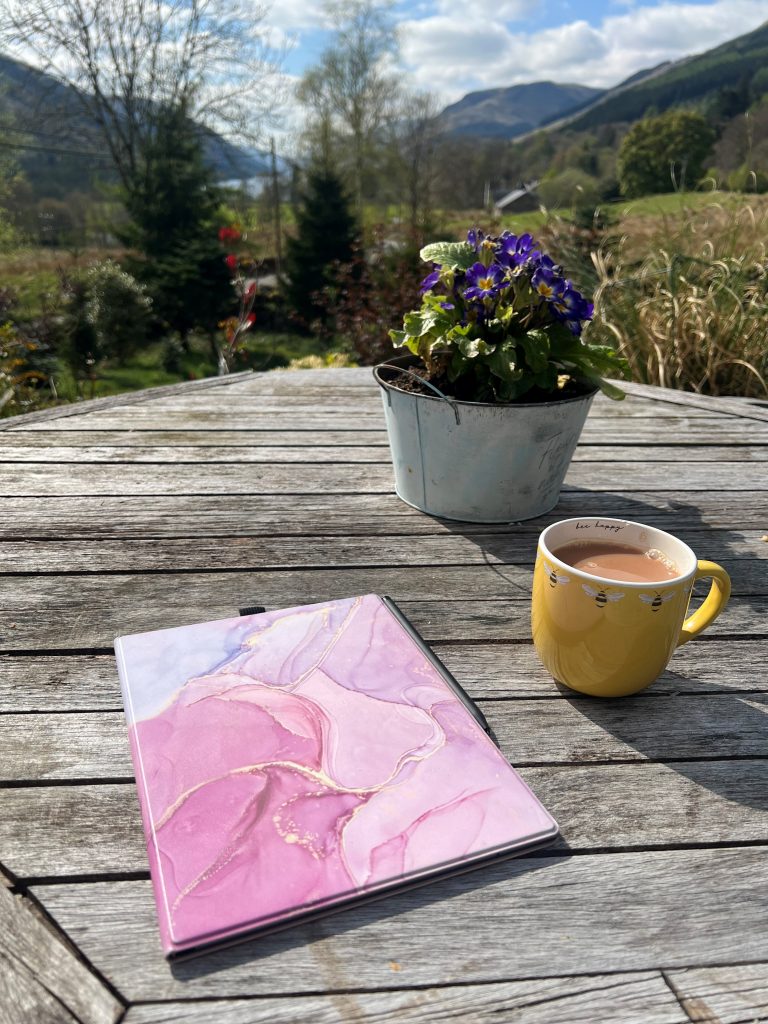
This may just be one of my most memorable gratitude list moments…Overlooking Loch Voil with a cup of tea in April. Scotland is my spiriutal home and will be my actual home in a few years. Just me, my tea, the sun and my Remarkable 2. Everyone asks me what it is and its the best for writing. Mainly because there’s no distractions on it.
Enjoyed this Gratitude List blog?
Check out our other recent blogs here – Blog – Love Life More